- Home
- ...
- Catalog Details
- AI-Powered Redundancy Detection
Sensedia Adaptive Governance’s Redundancy Detector uses artificial intelligence to automatically and accurately identify duplicate APIs or APIs with overlapping functionality.
NOTEDepending on the API type (category), the Redundancy Detector may not be available.
The tool analyzes OpenAPI contracts and supports strategic decisions on consolidating, standardizing, or deprecating redundant APIs. This works regardless of the gateway in use — Sensedia, Apigee, AWS, Azure, Mulesoft, or others.
As a result, you can reduce governance complexity, avoid rework, and encourage API reuse, contributing to a more efficient, clean, and sustainable architecture — without relying on manual audits.
NOTEBefore proceeding, please make sure the connection with the gateway is configured and that the APIs are registered in the catalog.
Checking for Redundancies
Step 2
Click Discovery from the left-hand side menu or from the card on the Adaptive Governance home page.
Step 3
The  icon under the ISSUES column indicates the presence of redundancy.
IMPORTANTThe absence of the icon does not necessarily mean there is no redundancy. After being imported, APIs must be processed, and the time required for redundancy detection may vary from a few minutes to several hours, depending on the number of APIs and the size of the imported contracts.
 icon to open the catalog details screen.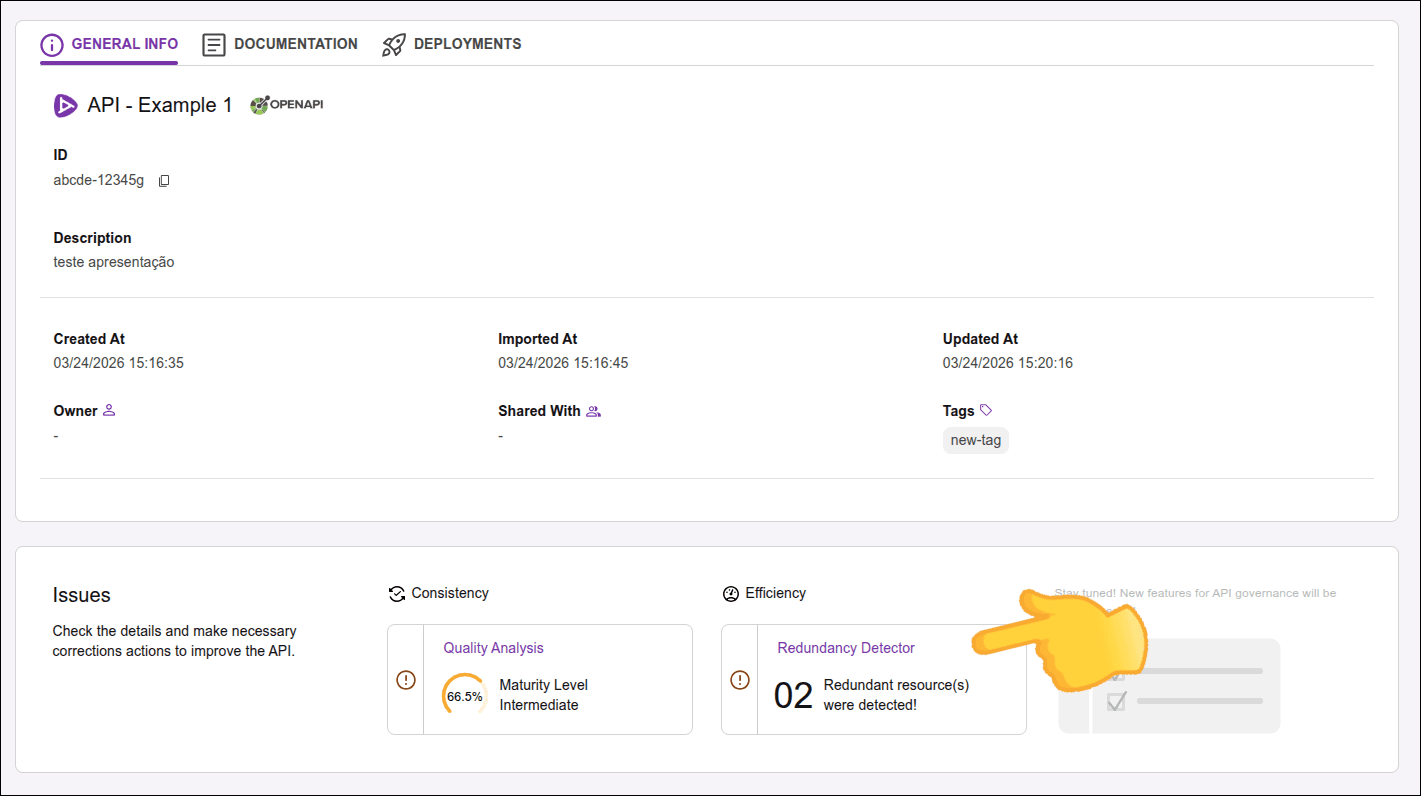
Step 6
You will see a list of resources with redundancy issues. In the ACTIONS column, click to expand or collapse the list. When expanded, you’ll see which resources are similar. The visual indicator shown in the LEVEL column indicates the level of similarity of the resource in relation to resources from other APIs with similar capabilities.
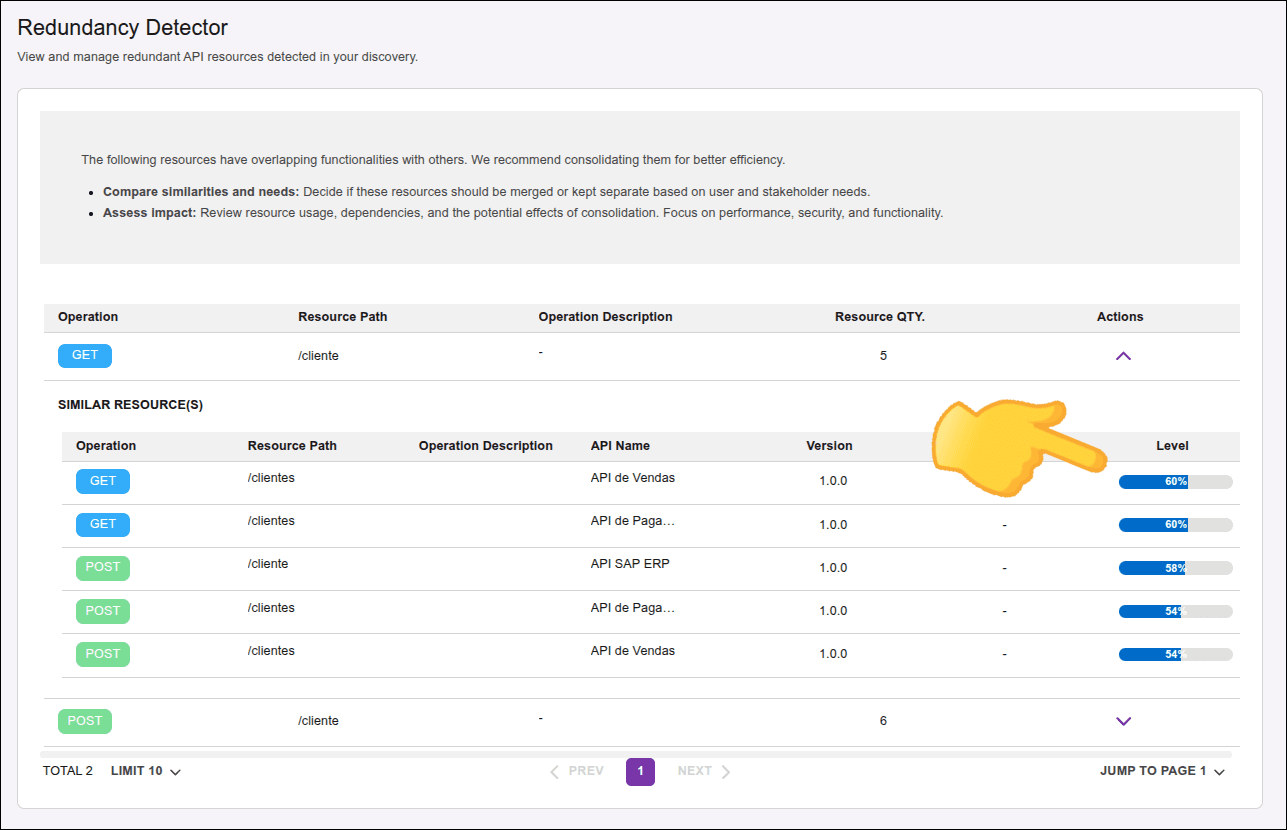
TIPWhen two or more resources have similar functions, it is recommended to consolidate them for greater efficiency. Before making a decision:
- Compare the resources to decide whether to keep them separate or merge them.
- Check the impact of the change, considering performance, security, and overall functionality.